Finance leaders rarely question whether they have enough technology. The deeper concern is whether their systems are structurally aligned to support clarity, speed, and control. What appears to be a mature finance environment often hides a fragmented architecture that limits insight and weakens performance over time.
Tool Overload Is Reshaping the CFO Tech Stack
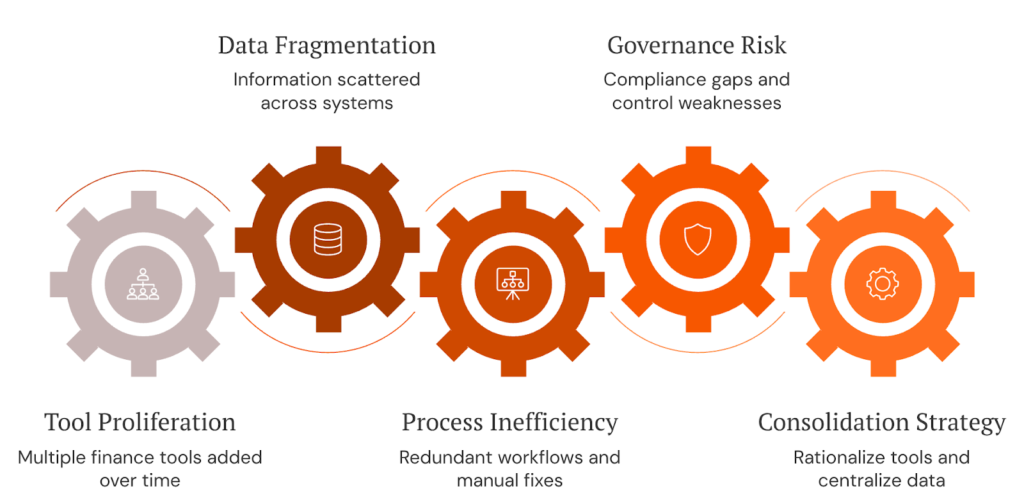
Cloud adoption has expanded software access across every finance function. Expense platforms, billing systems, procurement tools, planning applications, and reporting dashboards are frequently selected in isolation. The result is growing finance tool sprawl across departments.
As organizations expand, this accumulation becomes a form of SaaS overload that complicates oversight. An Accountancy Age report highlights that finance teams are increasingly burdened by fragmented tools that slow reporting and limit strategic visibility. Instead of accelerating performance, excessive tooling can increase reconciliation effort and process friction.
The presence of multiple disconnected finance systems gradually transforms the CFO tech stack into a patchwork structure that demands constant maintenance. While each tool may function effectively on its own, collective performance declines when integration is incomplete or inconsistent.
The Hidden Cost Of Data Fragmentation
Fragmentation is not a technical inconvenience. It is a structural constraint on decision quality.
When accounting data, forecasting assumptions, revenue pipelines, and procurement commitments exist in separate systems, insight becomes reactive. Teams spend time validating figures rather than interpreting them. A detailed breakdown from IT Convergence explains how disconnected enterprise data drives manual processes, duplicate records, and reporting delays that reduce overall operational efficiency.
Persistent data fragmentation weakens financial visibility. When leaders cannot rely on a single source of truth, they often request parallel reports for verification, which introduces further workflow inefficiency. The cumulative effect is slower decision cycles and reduced confidence in financial outputs.
This issue becomes especially visible during audits or board reporting, where inconsistencies surface and require manual correction. The cost is not limited to time. It affects credibility.
Why Do Disconnected Finance Systems Undermine Strategic Finance?
Disconnected finance systems undermine strategy because modern finance depends on contextual intelligence rather than static reporting.
A forecast disconnected from live expense data or sales commitments lacks depth. Integration layers can move data between platforms, yet they often fail to align definitions or harmonize logic. An analysis from ArionERP highlights how system separation complicates consolidation and delays accurate reporting.
Without structural alignment, organizations experience recurring workflow inefficiency. Finance teams extract, cleanse, and reconcile data before analysis can even begin. This repetitive effort shifts focus from performance optimization to operational maintenance. Strategic finance requires connected insight, not fragmented inputs.
Integration Limits And The Illusion of Connectivity
Basic integrations and middleware often provide a sense of progress. Data flows between systems, dashboards refresh, and APIs synchronize records. However, connectivity does not guarantee coherence.
A perspective from Zenskar explains that partial integration often leaves finance teams working across multiple interfaces, which complicates visibility and governance. Even when information transfers automatically, logic and ownership may remain inconsistent.
As integration layers multiply, system complexity grows. Maintaining dozens of connectors introduces technical dependencies that can break or misalign without warning. Over time, the architecture becomes fragile.
Tool expansion without consolidation perpetuates finance tool sprawl, reinforcing structural inefficiency rather than resolving it.
What High-Performing Finance Teams Do Differently
The following are the structural disciplines that distinguish high-performing finance teams from those constrained by fragmented systems:
- They control architecture intentionally– Instead of expanding the CFO tech stack without oversight, they evaluate long-term structural impact before adopting new systems. Redundant platforms are eliminated through disciplined tool consolidation.
- They reduce data fragmentation at the source– Shared definitions, centralized governance, and unified reporting structures improve reliability. Strong data discipline enhances finance visibility and reduces manual corrections.
- They prioritize workflow alignment- Process design precedes system procurement. This approach minimizes workflow inefficiency and ensures automation enhances rather than complicates execution.
- They build intelligent finance ecosystems– Adoption of a centralized analytics layer or AI finance hub supports predictive modeling on harmonized data, improving accuracy without adding disconnected platforms.
These practices reflect structural maturity rather than technology enthusiasm.
Unified Intelligence Through Tool Consolidation
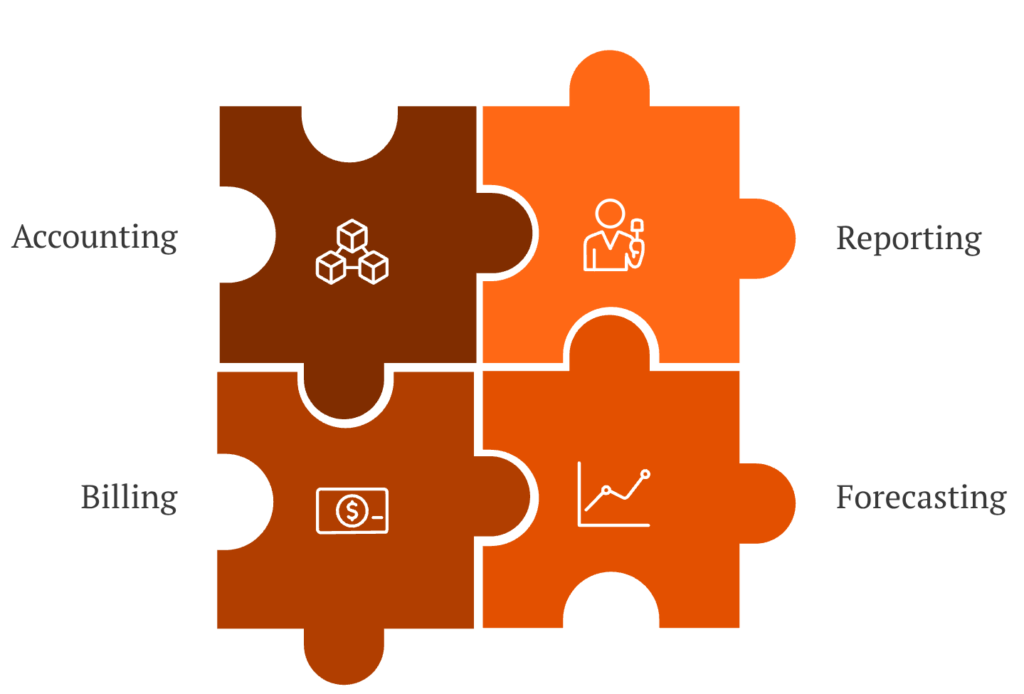
A strategic shift toward tool consolidation redefines the operating model of finance. Instead of layering specialized applications across functions, organizations centralize core processes within a unified finance platform.
Such platforms integrate accounting, reporting, forecasting, and analytics into a consistent architecture. This consolidation reduces duplicate entries, strengthens governance, and simplifies oversight of the CFO tech stack.
An AI finance hub operating within a harmonized environment further enhances performance by applying predictive analytics across unified datasets. When data flows through a coherent system, anomaly detection improves and forecast assumptions become more transparent. The objective is clarity and reliability.
Transformation Through Simplified Systems
When finance leaders address finance tool sprawl directly, measurable shifts occur.
Accuracy improves as reconciliations decline and system definitions align. Reliability strengthens when data fragmentation decreases and reporting cycles shorten. Performance increases because teams focus on analysis instead of manual consolidation.
Improved finance visibility supports confident capital allocation and risk management decisions. A streamlined CFO tech stack also reduces exposure created by excessive SaaS overload, improving governance and security oversight. These improvements are structural and cumulative.
Final Thoughts
Finance transformation is not about adding more tools. It is about building structural clarity into the architecture that supports decision-making. When systems are fragmented, performance slows, reconciliation increases, and insight weakens. Over time, complexity compounds. What begins as incremental tool adoption can quietly evolve into structural inefficiency that limits visibility and control.
True modernization requires intentional design. It means aligning systems, data definitions, workflows, and governance into a coherent finance architecture that supports both operational execution and strategic oversight. Clarity is not achieved through connectivity alone, but through intelligent consolidation that reduces friction at the source.
An AI-powered finance automation platform like Fintropi helps organizations move beyond disconnected systems by centralizing workflows, reducing fragmentation, and strengthening governance across the CFO tech stack. By embedding automation, intelligence, and real-time visibility into core finance processes, it transforms finance from a reactive reporting function into a proactive decision engine.
The goal is not expansion, but disciplined consolidation. When finance architecture is structurally aligned, leaders gain faster reporting cycles, stronger internal controls, and more confident financial decisions that scale with the organization.
FAQs
- What causes finance tool sprawl?
Decentralized purchasing decisions and rapid growth often expand the CFO’s tech stack without architectural planning, resulting in finance tool sprawl and integration challenges.
- How does data fragmentation affect reporting?
Persistent data fragmentation increases reconciliation effort and weakens finance visibility, which slows strategic decision-making.
- Can a unified finance platform reduce workflow inefficiency?
A properly implemented unified finance platform centralizes reporting and forecasting, directly reducing workflow inefficiency caused by disconnected finance systems.
- What role does an AI finance hub play?
An AI finance hub enhances predictive accuracy by applying analytics to harmonized financial data within a consolidated architecture.
- How should organizations begin tool consolidation?
Start with a structured audit of all disconnected finance systems, identify overlapping functionality, and prioritize phased tool consolidation aligned with governance goals. Platforms such as Fintropi can support this transition when integrated thoughtfully.