Finance has traditionally been evaluated by its ability to control spend, protect margins, and close the books accurately, yet executive teams increasingly expect something far more influential. The real strategic challenge today is how finance transformation can reposition the function as a driver of enterprise direction, measurable growth, and sustained finance value creation rather than a reporting unit operating behind the scenes.
The Limits of the Old Finance Mindset
For decades, finance earned credibility through discipline and control. Compliance, reconciliations, and budget enforcement defined performance. While those foundations remain essential, they are no longer sufficient in isolation.
Business leaders now demand forward-looking clarity. They want scenario modeling before investment decisions, risk visibility before expansion, and performance forecasts before strategic shifts. However, many finance teams remain constrained by manual processes, siloed data, and reactive reporting cycles. When teams spend the majority of their time collecting and validating numbers, little capacity remains for meaningful decision support.
Research reinforces this tension. McKinsey highlights how finance teams are increasingly deploying AI to shift effort away from transactional work and toward analytical contribution, enabling deeper engagement in strategy discussions (McKinsey). The implication is clear: financial evolution is no longer optional if organizations expect agility and insight.
Why Does Traditional Finance Struggle to Enable Strategic Finance?
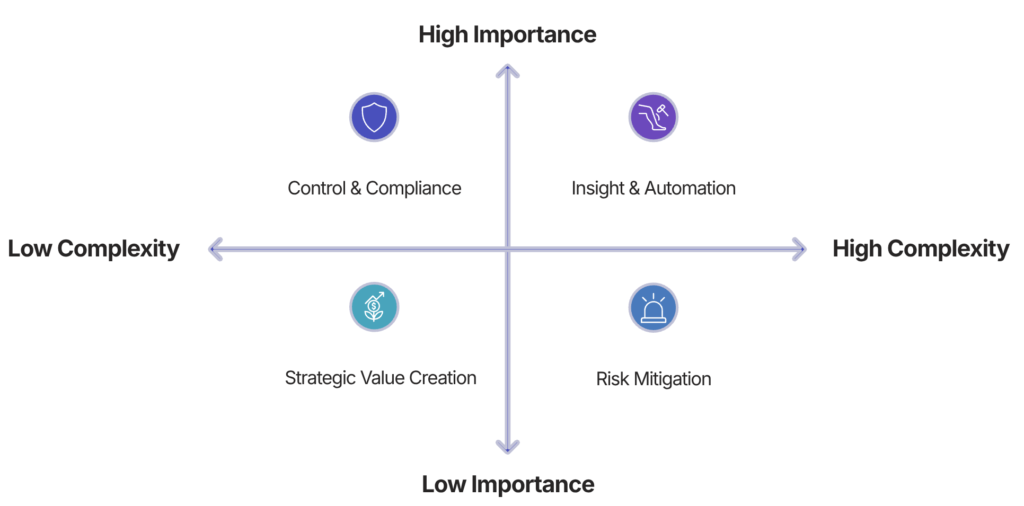
Traditional finance struggles to enable strategic finance because its operating model was built for control, not intelligence.
Legacy systems emphasize periodic reporting rather than continuous insight. Data often sits across disconnected tools, requiring manual reconciliation before analysis can even begin. This structure delays interpretation and weakens confidence in forecasts.
At the same time, expectations placed on the modern CFO have expanded significantly. According to BDO’s perspective on Finance Transformation 2.0, CFOs are evolving into Chief Value Officers who are accountable for shaping enterprise performance and long-term value, not merely financial reporting (BDO). Delivering on this expanded CFO strategy requires real-time visibility, predictive capabilities, and integrated data ecosystems.
Without structural modernization, finance remains reactive. Strategic finance requires foresight, but foresight depends on data accuracy, automation, and analytical bandwidth.
The Rise of AI-Driven Finance and Intelligent Insight
AI-driven finance represents a structural redefinition of how financial work is performed and how insight is generated.
Automation reduces manual intervention in processes such as invoice processing, reconciliations, and reporting. AI-driven invoice and payment processing shortens cycle times while improving consistency and reducing error rates. Automated vendor reconciliation strengthens financial control frameworks without requiring proportional increases in headcount. Real-time analytics and audit capabilities provide continuous visibility into transactions, risks, and anomalies, enabling finance teams to move from periodic review to ongoing oversight.
More importantly, AI-powered finance automation platforms shift the center of gravity within finance operations. Instead of concentrating on transaction validation and data consolidation, teams can focus on interpreting data insights, strengthening decision support, and aligning financial performance with broader business objectives.
PwC notes that finance functions leveraging AI and advanced analytics can move beyond cost management toward higher value advisory roles, supporting growth and competitive positioning (PwC). This reflects a broader shift in finance value creation, where insight becomes as important as efficiency.
What High-Performing Finance Teams Do Differently
High-performing finance organizations consistently distinguish themselves through structural and behavioral discipline.
The following practices define how they consistently outperform their peers:
- Embed business partnering into planning cycles– Finance professionals actively collaborate with operational leaders early in strategy development. Strong business partnering ensures that forecasts, cost structures, and investment models reflect operational realities.
- Prioritize intelligent automation at scale– Intelligent financial workflow automation streamlines approvals, reconciliations, and payment processes across the finance function. Reducing manual touchpoints improves reliability, minimizes error rates, and releases capacity for forward-looking analysis within AI-driven finance environments.
- Invest in a unified data architecture–Seamless ERP integration for unified data eliminates silos and reduces reconciliation delays across departments. Integrated systems strengthen trust in data insights, improve reporting accuracy, and accelerate executive-level visibility.
- Adopt continuous performance monitoring– Insight-driven financial oversight enables real-time evaluation of financial health and operational performance. Continuous visibility strengthens risk management, improves forecast reliability, and enhances high-quality decision support.
Each of these practices reinforces finance transformation by aligning systems, people, and strategy.
The Shift: When Finance Becomes a Strategic Force
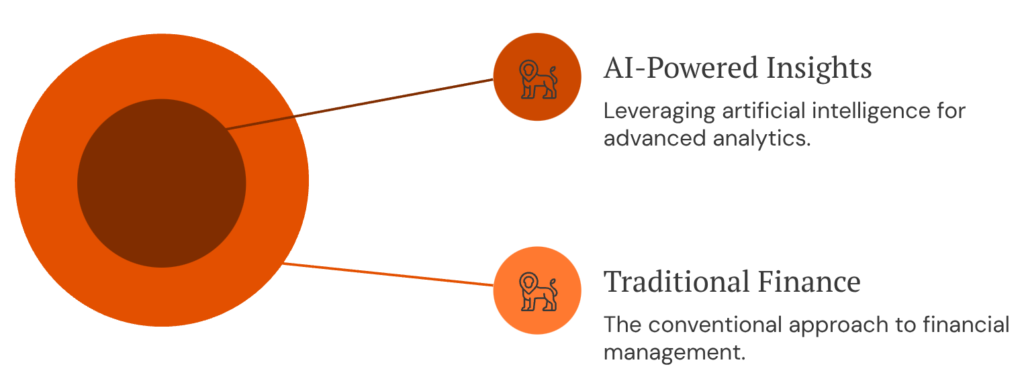
When finance transformation is executed deliberately, measurable shifts occur across the organization.
Accuracy improves because AI-driven finance systems automate validation and anomaly detection. Reliability increases as standardized workflows reduce dependency on manual consolidation. Performance conversations become forward-looking rather than retrospective.
The modern CFO wields greater influence in shaping corporate direction. CFO strategy becomes anchored in predictive modeling, capital optimization, and scenario analysis rather than post-event explanation. Stronger data insights inform pricing, investment timing, and cost restructuring decisions.
This transformation also changes perception. Finance is no longer seen as a constraint but as a catalyst. Business leaders engage finance earlier, strengthening business partnering and accountability.
Strategic Advantage Through Modern Finance
Organizations that embrace strategic finance build structural competitive advantages that extend well beyond reporting efficiency.
They respond faster to uncertainty because scenario models and performance simulations are readily available when leadership needs them. Capital allocation decisions are guided by real-time analytics rather than retrospective quarterly summaries, and risk identification becomes proactive through continuous visibility instead of reactive after issues surface.
Companies leveraging an AI native Autonomous Finance Operations Platform like Fintropi operate with connected workflows that unify transaction management, compliance controls, and executive oversight within a single ecosystem. These AI-driven finance capabilities enhance liquidity visibility, strengthen governance, and significantly improve forecast precision.
Over time, the impact compounds. Finance evolution reinforces investor confidence, strengthens operational discipline, and builds long-term resilience. Finance value creation becomes measurable through improved working capital efficiency, reduced processing errors, faster close cycles, and tighter alignment between strategy and execution.
Wrapping Up
Finance stands at a decisive inflection point where control and compliance alone cannot meet organizational expectations. Sustainable growth demands integrated systems, embedded intelligence, and a clearly articulated CFO strategy focused on long-term performance.
AI-driven finance, supported by intelligent workflow automation and seamless data integration, repositions finance as a central contributor to enterprise success. AI-Native Autonomous Finance Operations Platform, like Fintropi, enables organizations to accelerate finance transformation while strengthening clarity, reliability, and actionable data insights.
Start Transformation by embracing strategic finance capabilities that elevate finance value creation and deliver stronger decision support across the enterprise.
FAQs
- What does finance transformation involve?
Finance transformation involves redesigning processes, technology, and organizational roles to improve efficiency, analytics, and strategic contribution.
- How does AI-driven finance improve financial value creation?
AI-driven finance automates repetitive tasks, enhances data accuracy, and enables predictive analysis, which directly supports stronger finance value creation.
- What defines a modern CFO?
A modern CFO combines governance and compliance expertise with strategic leadership, embedding decision support and enterprise-wide value management into daily operations.
- Why is business partnering important in strategic finance?
Strong business partnering ensures that financial analysis directly informs operational and commercial decisions, strengthening alignment and performance.
- How can organizations begin financial evolution?
Organizations can begin finance evolution by investing in automation, improving data governance, and adopting AI-powered finance automation platforms like Fintropi to support scalable growth.