
Enterprise resource planning systems are essential operational platforms that coordinate functions from finance to supply chain through a unified database. These unified finance systems create connected data flows and eliminate manual reconciliation across departments, which can improve accuracy and efficiency. However, ERP finance integration alone stops at connectivity. For modern decision-making, organizations require interpretation, trend detection, forecasting, and proactive insight that traditional ERP systems are not designed to deliver by themselves. Understanding why integration must be paired with intelligence has become critical for organizations seeking to elevate performance and sustain strategic clarity.
Where Traditional ERP Approaches Fall Short
ERP systems were developed to centralize information and standardize operational workflows across business functions. By consolidating data in one platform, they reduce duplication and increase visibility into transactional processes, particularly across finance and accounting teams using platforms such as SAP Finance, Oracle Finance, and NetSuite integration environments. However, ERP limitations become apparent when integration alone does not guarantee that this data becomes actionable insight.
ERP platforms often rely on manual reporting or external tools to generate analytics, creating delays and limiting the ability of leaders to respond quickly to emerging issues.
For example, an ERP integration may successfully unify data from procurement, inventory, and finance, yet still leave analysts exporting to spreadsheets for trend analysis. This defeats the purpose of real-time visibility and can reintroduce data silos, errors, and delays in decision cycles. These inherent gaps underscore that integration without intelligence leaves organizations with connected systems but not informed systems.
What Intelligence Adds That Integration Can not
The difference between integrated systems and intelligent systems becomes clearer when their impact is viewed over time rather than at a single moment. While integration improves data flow and operational consistency, an intelligent finance layer compounds value by continuously interpreting patterns, surfacing risks, and guiding decisions as conditions change.
This progression explains why organizations that invest in AI ERP enhancement gain clarity and responsiveness with scale, while those relying on integration alone often experience diminishing insight as complexity grows.
Why Do Integrated ERP Systems Still Create Blind Spots
Systems that simply exchange data often lack contextual understanding. Integration enables data movement, but intelligence assesses patterns, anomalies, and predictive indicators that reveal implications for future performance. Traditional ERP implementations emphasize centralization and consistency, yet lack the analytical capacity to detect trends or advise on future outcomes.
The concept of intelligence in enterprise systems refers to the ability to convert raw data into insights that guide decisions rather than just record transactions. Business intelligence tools applied on top of ERP data transform integrated platforms into unified finance systems that support proactive management rather than retrospective reporting.
ERP Strengths And Structural Gaps
The strengths of ERP systems lie in process automation, standardization, and integration of core business functions. As a result, organizations gain consistent data, simplified access to reports, and reduced need for multiple disparate systems. For instance, ERP’s unified database supports finance, procurement, and HR under a single structure, strengthening enterprise-wide finance architecture. (IBM)
However, merging data sources in an ERP does not automatically generate insight. Without an intelligent finance layer, organizations may spend significant time interpreting reports manually or reconciling inconsistent views across departments. This gap becomes especially noticeable in forecasting, anomaly detection, and strategic planning.
Constraints And Misconceptions Around Intelligence Adoption
A common misconception is that business intelligence replaces ERP systems. In reality, these capabilities are complementary. ERP provides the foundational data layer, while intelligence systems apply analytical frameworks that enhance ERP finance integration without disrupting operational stability.
Another constraint is the challenge of embedding intelligence without overwhelming users with complexity. Successful AI ERP enhancement focuses on clarity, relevance, and decision support rather than volume of reporting.
Benefits And Opportunities Of Intelligence In ERP
Intelligence transforms ERP from a system of record into a system of insight and action. When analytics and visualization tools are integrated with ERP data, organizations gain the ability to:
- Monitor operations in real time rather than retrospectively.
- Detect performance anomalies early and act proactively.
- Generate forecasts based on patterns rather than assumptions.
- Support executive decision making across SAP finance, Oracle finance, and NetSuite integration environments.
These capabilities reduce reliance on manual processes and strengthen unified finance systems by enabling forward-looking analysis. (Domo)
Technology And Systems That Enable Smarter ERP
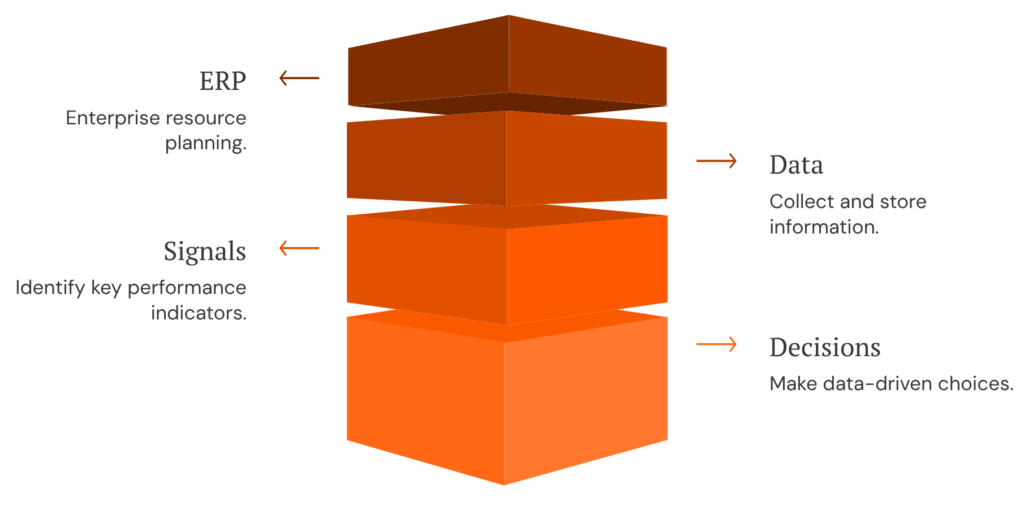
Embedding intelligence into ERP environments often involves analytics platforms, dashboards, and predictive models that sit atop operational databases. These systems enhance finance architecture by layering insight over transactional data rather than replacing core ERP functionality.
Predictive analytics modules used as part of AI ERP enhancement initiatives can forecast demand, cash flow, and financial risk based on historical patterns and real-time signals.
Impact On Decision Making And Performance
When intelligence is part of the enterprise system architecture, decision quality improves across the organization. Leaders gain early visibility into performance changes, cost drivers, and forecast deviations. This timely insight supports faster course corrections and better resource allocation. Intelligence reduces the latency between data collection and action, bringing finance, operations, and leadership teams into alignment.
Analytics also supports the standardization of performance metrics, which enhances cross-functional communication and reduces conflict over inconsistent data interpretations. Instead of debating which dataset is authoritative, teams rely on a unified analytical layer that synthesizes multi-source data into consistent and interpretable outputs.
Competitive Advantage Through Intelligent Architecture
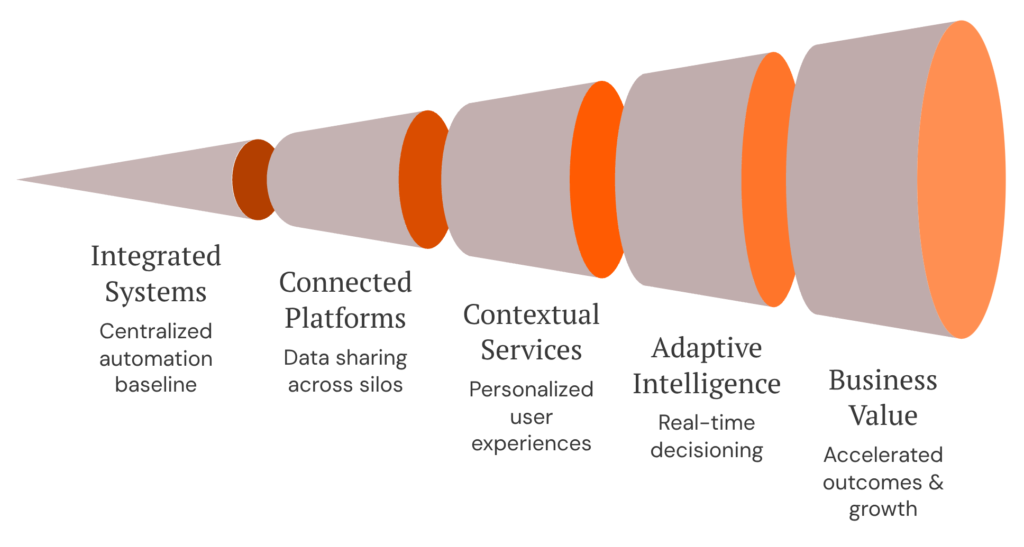
Organizations that pair integration with intelligence achieve a strategic advantage by staying ahead of market and operational shifts. They understand not just what has happened, but why it happened and what is likely to happen next.
This advantage becomes especially pronounced when ERP platforms evolve beyond integration to support intelligent finance layers that guide strategic decisions across complex enterprise environments.
What High-Performing Teams Do Differently
The following practices highlight how high-performing teams translate intelligence into consistent operational advantage:
- Align intelligence with strategic goals– Top teams define analytical outcomes that matter for decisions, not just dashboards. They link analytical models to strategic metrics that drive performance evaluation rather than operational reporting alone.
- Ensure consistent data governance– Reliable insight depends on consistent definitions and standardized data structures. Leaders who invest in governance reduce ambiguity and increase trust in analytical outputs.
- Integrate predictive analytics with operations– Beyond descriptive reporting, high performers embed forecasting and scenario tools into the ERP environment so planning is proactive rather than reactive.
- Promote analytical literacy– Teams that understand how to interpret insights, rather than just view them, gain more from intelligence layers. Training and governance support adoption and reduce misinterpretation risks.
When ERP Intelligence Becomes a Strategic Asset
When organizations move beyond basic system connectivity and focus on intelligence-driven decision support, ERP platforms shift from operational backbones to strategic enablers. This progression requires tools that respect existing finance architecture while adding analytical depth where it matters most.
See Integrations with Fintropi to understand how intelligence layers can work alongside ERP systems to support clearer insight, stronger alignment, and more confident financial decisions.
FAQs
- Why is ERP integration not sufficient on its own?
ERP integration breaks down silos and centralizes data, but it does not interpret patterns, forecast outcomes, or alert decision makers to emerging trends. Intelligence tools are required to translate raw data into actionable insight that supports strategic choices.
- What role does business intelligence play within ERP?
Business intelligence introduces analytical layers that extract, structure, and visualize ERP data to support informed decisions. When implemented thoughtfully, platforms such as Fintropi demonstrate how intelligence can sit alongside ERP systems to improve clarity without disrupting core operations.
- Can traditional ERP systems support real-time insights?
Traditional ERP systems can collect real-time data, but they often lack the analytical infrastructure to interpret that data in context. Adding intelligence enables real-time insight beyond record keeping.
- Are ERP and intelligence complementary technologies?
Yes, ERP provides the foundation of integrated data, while intelligence systems provide analytical interpretation that informs strategy and operational adaptations.
- How should organizations begin adding intelligence to ERP?
Organizations should begin by identifying high-impact decision points where insight gaps exist. Aligning intelligence tools with these use cases, supported by strong data governance and executive sponsorship, improves adoption and long-term value. Solutions like Fintropi are often evaluated in this phase for their ability to integrate intelligence without creating complexity.